
Table of Contents
Marine structures operate in some of the most corrosive environments encountered in construction. Constant exposure to seawater, changing tides, dissolved oxygen, and other environmental conditions can gradually weaken steel components and increase maintenance requirements. Cathodic protection is an established corrosion control method that helps preserve submerged and buried steel by reducing the electrochemical reactions responsible for metal deterioration. From ports and offshore platforms to steel sheet pile walls and marine foundations, properly designed cathodic protection systems can contribute to longer service life and more predictable maintenance planning. Understanding how these systems work, the differences between galvanic and impressed current protection, and the importance of ongoing monitoring is essential for engineers, contractors, and infrastructure owners responsible for marine construction projects.
Understanding Corrosion in Marine Structures
Why Marine Environments Accelerate Steel Corrosion
Steel corrosion is an electrochemical process that occurs when iron reacts with its surrounding environment. In marine conditions, seawater acts as an electrolyte, allowing electrical current to flow between areas of different electrochemical potential on a steel surface. At anodic locations, iron dissolves into the surrounding electrolyte, gradually reducing the amount of sound metal available to carry structural loads.
The presence of dissolved salts makes seawater electrically conductive, facilitating electrochemical corrosion reactions. Corrosion behavior also depends on oxygen availability, temperature, water movement, biological activity, and local water chemistry. These factors can vary significantly between coastal locations and even between different elevations on the same structure.
For marine infrastructure, corrosion is more than a cosmetic concern. Progressive metal loss can reduce the thickness of structural members, damage connections, and compromise the performance of components such as steel piles, braces, and sheet pile walls.
Corrosion Across Different Marine Exposure Zones
Marine structures are commonly divided into atmospheric, splash, tidal, submerged, and seabed exposure zones. Each zone experiences different environmental conditions, which influence corrosion mechanisms and the effectiveness of protective systems.
The splash zone is particularly challenging because surfaces experience frequent seawater wetting, oxygen exposure, and drying. According to guidance published by the U.S. Army Corps of Engineers, the splash zone can experience substantially greater corrosion than steel that remains continuously submerged. Protective coatings and other suitable measures are therefore especially important in this region.
The submerged zone provides conditions where cathodic protection can generally operate effectively because the steel remains in contact with a conductive electrolyte. Steel driven into marine sediments can also benefit from cathodic protection when the system is appropriately designed for the surrounding conditions.
The effectiveness of cathodic protection in the tidal zone depends on how long the surface remains submerged. ISO 13174:2012 explains that effective protection is typically achieved below mid-tide level, while surfaces that are exposed to air for extended periods require additional corrosion control measures.
What Is Cathodic Protection and How Does It Work?
The Electrochemical Principles Behind Cathodic Protection
Cathodic protection, commonly abbreviated as CP, is a corrosion control technique that reduces the corrosion rate of a metal surface by making it the cathode of an electrochemical cell. The system supplies protective electrical current to the steel, shifting its electrochemical potential in a direction that suppresses the anodic reactions responsible for metal dissolution.
In an unprotected steel structure, certain areas act as anodes while others function as cathodes. At the anodic areas, metal atoms lose electrons and enter the surrounding electrolyte as ions. This process produces the metal loss associated with corrosion.
Cathodic protection changes these electrochemical conditions by introducing a separate source of protective current. When sufficient protection is achieved, the corrosion rate of the steel can be reduced substantially.
The process does not reverse existing corrosion damage or restore metal that has already been lost. Its purpose is to control further deterioration and help preserve the remaining steel.
The Role of Electrical Current in Steel Preservation
A functioning cathodic protection system requires an electrical connection between the protected structure and the current source. It also requires an electrolyte, such as seawater or conductive marine sediment, through which ionic current can flow.
Protective current reaches the steel surface and changes the electrochemical conditions under which corrosion occurs. The amount of current required depends on factors such as exposed surface area, environmental conditions, coating condition, and the specified protection criteria.
Too little current may leave portions of the structure inadequately protected. Excessive polarization can also create problems, including coating disbondment and hydrogen-related damage in susceptible materials, making careful engineering essential.
The design objective is therefore not simply to provide as much current as possible. Engineers must establish appropriate protection conditions and ensure those conditions can be maintained throughout the intended operating life.
Types of Cathodic Protection Systems Used in Marine Construction
Two principal cathodic protection technologies are used for marine steel structures: galvanic anode cathodic protection and impressed current cathodic protection. Both work by reducing corrosion activity on the protected metal, but they differ in how protective current is generated and controlled.
Galvanic Anode Cathodic Protection
Galvanic anode cathodic protection uses an electrochemically active metal connected to the steel structure. The anode has a more negative electrochemical potential than the steel under operating conditions, causing it to corrode preferentially while supplying protective current to the structure.
These anodes are commonly called sacrificial anodes because they are gradually consumed during operation. Aluminum and zinc alloys are widely used for marine applications, with the specific material selected according to environmental conditions and design requirements.
One important advantage of galvanic anode systems is that they do not require an external electrical power supply. Their operation relies on the natural electrochemical potential difference between the anode material and the protected steel.
Galvanic systems are commonly used on offshore structures, marine foundations, steel piles, and other submerged components. Their relatively simple operating arrangement makes them suitable for locations where access to electrical infrastructure may be limited.
However, galvanic anodes have a finite service life because their active material is consumed over time. The system must therefore be designed with sufficient anode capacity and current output to satisfy the required operating period.
Impressed Current Cathodic Protection
Impressed current cathodic protection, commonly called ICCP, uses an external direct current power supply to provide protective current. The system generally consists of a rectifier or other DC power source, anodes, electrical connections, and equipment for measuring or controlling protection performance.
Unlike galvanic systems, ICCP does not rely on the natural potential difference between two metals to generate the required current. Instead, the power supply drives current from the anodes through the electrolyte toward the protected steel.
ICCP systems commonly use anodes designed for relatively low consumption during operation. Depending on the application, these may include mixed metal oxide-coated titanium or other suitable anode materials.
The ability to adjust current output is an important advantage of ICCP. Engineers and operators can modify system output to accommodate changing protection requirements, subject to the system’s design limits.
However, this additional control introduces greater electrical and operational complexity. Rectifiers, wiring, connections, reference electrodes, and control equipment require inspection and maintenance to ensure reliable operation.
Galvanic vs Impressed Current: Key Differences
The selection between galvanic and impressed current protection depends on the physical characteristics of the marine structure, environmental conditions, available power, installation constraints, and maintenance strategy.
Neither approach is automatically superior for every project. A comparison of the major characteristics helps explain why different marine structures may require different corrosion control solutions.
|
Feature |
Galvanic Anode Protection |
Impressed Current Protection |
|---|---|---|
|
Current source |
Natural electrochemical potential difference |
External DC power supply |
|
Common anode materials |
Aluminum and zinc alloys |
Mixed metal oxide-coated titanium and other suitable anodes |
|
External electricity |
Not required |
Required during operation |
|
Current adjustment |
Limited by system characteristics |
Adjustable through power supply controls |
|
System complexity |
Generally simpler |
Generally more complex |
|
Anode consumption |
Designed for gradual consumption |
Typically uses relatively low-consumption anodes |
|
Maintenance requirements |
Periodic inspection and eventual anode replacement |
Electrical equipment inspection, monitoring, and component maintenance |
|
Typical applications |
Offshore steel structures, piles, and marine foundations |
Large or complex installations where controlled current is advantageous |
|
Primary design consideration |
Adequate current output and anode capacity |
Current distribution, electrical reliability, and system control |
For permanently installed offshore structures, galvanic anodes are frequently preferred because of their simplicity and independence from external electrical power. DNV-RP-B401 provides established guidance for the design and installation of aluminum- and zinc-based galvanic anode systems on offshore structures.
Impressed current systems may be attractive when electrical power and maintenance access are available and adjustable output is beneficial. Their suitability must still be assessed against the particular structure, surrounding environment, and applicable engineering standards.
Designing Effective Anode Systems for Marine Structures
Evaluating Environmental and Structural Conditions
Cathodic protection design begins with an assessment of the structure and its exposure conditions. Engineers must determine which metallic surfaces require protection, whether those surfaces are electrically connected, and how their surrounding environment affects current demand.
Important design inputs include seawater resistivity, temperature, structure geometry, submerged surface area, sediment conditions, and the presence of protective coatings. The required service life must also be established because it directly influences anode capacity and long-term system performance.
Marine structures may include components with different exposure conditions. A steel pile extending from the atmosphere through the tidal zone and into marine sediment will not experience uniform corrosion conditions along its entire length.
Design calculations must account for these differences rather than treating every surface as equally exposed. For more complex structures, engineers may also need to evaluate how protective current is distributed across electrically connected components.
Calculating Anode Capacity and Current Demand
The current demand of a marine structure depends partly on the amount of steel exposed to the electrolyte. Bare steel generally requires more protective current than an effectively coated surface under comparable conditions.
Engineers calculate the required protection current using project-specific current density assumptions and the relevant surface areas. For coated structures, the design also considers how coating deterioration may increase current demand over time.
Galvanic anode systems require calculations for both electrical current output and total anode capacity. An anode must be capable of delivering adequate protective current while also containing enough usable material to support the specified design life.
Anode dimensions, material properties, utilization factors, and operating conditions all influence these calculations. Simply increasing the number of anodes without evaluating current distribution and capacity does not guarantee effective protection.
For ICCP systems, the design process must establish appropriate power supply capacity and anode arrangements. It must also consider the possibility of uneven protection or excessive polarization near anodes.
Anode Placement and Electrical Continuity
Anode placement is an important part of cathodic protection performance. Protective current must reach the intended steel surfaces through the surrounding electrolyte, making the physical arrangement of anodes and structural components an engineering consideration.
Anodes installed on marine structures must also withstand relevant mechanical conditions. Wave action, currents, vessel movements, impact risks, and construction activities can affect the durability of anode supports and electrical connections.
Electrical continuity between the protected steel components is essential where a common cathodic protection system is intended to protect them. Poor connections or electrically isolated sections can prevent adequate current from reaching particular areas.
On steel sheet pile walls, for example, engineers must assess the electrical continuity between individual piles and connected structural elements. Where necessary, bonding arrangements can be included to establish a reliable electrical path.
A properly designed anode system therefore involves more than the selection of anode material. It requires coordinated decisions about capacity, placement, attachment, electrical connections, and access for future inspection.
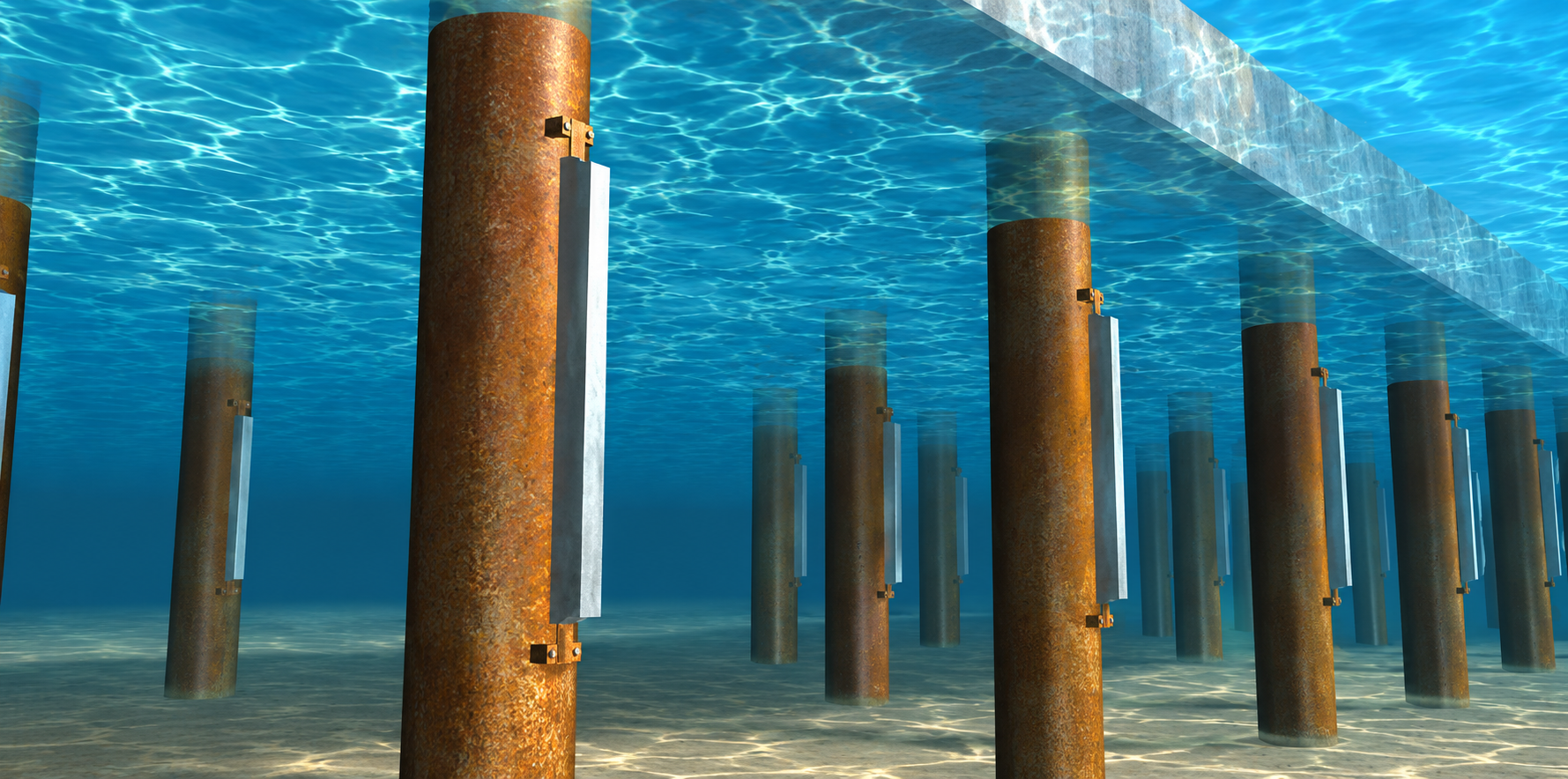
Galvanic cathodic protection systems generate protective current through the natural electrochemical potential difference between an anode and the protected steel. Aluminum and zinc alloys are commonly used as sacrificial anodes in seawater applications.
Cathodic Protection for Different Marine Structures
Steel Piles and Marine Foundations
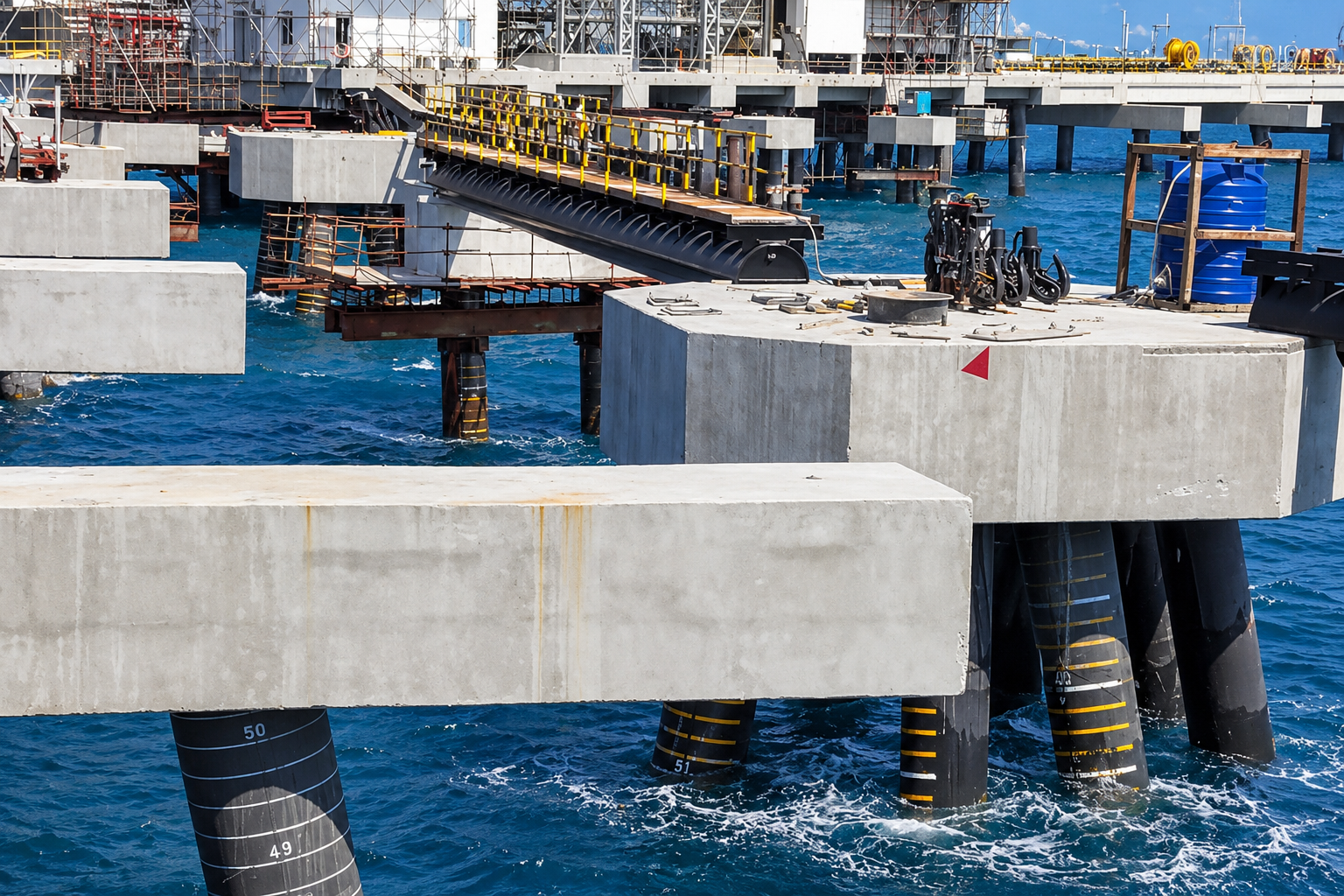
Steel piles are widely used to support piers, jetties, offshore structures, and waterfront facilities. Their submerged and buried sections can remain exposed to corrosive conditions throughout the operating life of the structure.
Cathodic protection helps reduce corrosion-related metal loss on the protected portions of these components. For foundation systems where underwater inspection and repair can be difficult, corrosion control is an important part of long-term asset management.
The protected area may extend from continuously submerged sections into conductive marine sediments. However, portions of the pile above the effective cathodic protection zone still require appropriate corrosion management.
Protective coatings, suitable material selection, and allowance for anticipated corrosion may therefore be used alongside cathodic protection. This combined approach helps address the different exposure conditions encountered along the pile.
Steel Sheet Pile Walls and Waterfront Retaining Structures
Steel sheet pile walls are commonly used for quay walls, bulkheads, retaining structures, and other waterfront applications. These installations may have large submerged surfaces that are exposed to seawater over extended periods.
Cathodic protection can help control corrosion on surfaces accessible to protective current. Depending on the structural arrangement, this may include submerged external surfaces and certain buried surfaces in contact with conductive material.
The design must consider whether adjacent sheet piles are electrically continuous and whether protective current can reach the intended areas. The presence of coatings, connections, sediments, and adjoining structures may influence the final arrangement.
Special attention is needed around the splash and tidal zones, where cathodic protection alone may not provide adequate protection. Coatings and other corrosion control measures remain important for these areas.
Offshore Platforms and Subsea Structures
Offshore platforms and subsea installations frequently contain extensive steel components that remain submerged for long periods. Their foundations, braces, and underwater connections can be difficult and expensive to access for major repairs.
Cathodic protection is widely used as part of the corrosion management strategy for these structures. Galvanic anode systems are particularly common on permanently installed offshore steel structures.
Offshore CP design must account for the intended operating life, environmental conditions, and accessibility of the installation. Designers must also consider whether the anodes can be inspected, supplemented, or replaced during operation.
DNV-RP-B401 addresses galvanic cathodic protection design for permanently installed offshore structures associated with oil and gas production. Its guidance includes design procedures, anode manufacturing requirements, installation considerations, and recommendations concerning inspection and retrofit.
Floating Docks, Pontoons, and Harbour Infrastructure
Floating marine structures can also benefit from cathodic protection when they contain metallic components exposed to seawater. Examples include steel pontoons, floating docks, and submerged hardware associated with mooring systems.
The design of these systems must account for electrical continuity between the components intended to receive protection. Movement, flexible connections, and changing operating conditions can create additional design challenges compared with fixed installations.
ISO 13174:2012 specifically addresses cathodic protection of fixed and floating port and harbour structures. Its scope includes piers, jetties, dolphins, sheet and tubular piling, pontoons, floating docks, and other relevant harbour installations.
This standard provides a framework for applying cathodic protection to immersed and driven or buried metallic surfaces in seawater and saline mud. Other standards may be required for applications outside its scope, including offshore structures and certain internal compartments.
Combining Cathodic Protection with Protective Coatings
How Coatings Reduce Cathodic Protection Demand
Protective coatings and cathodic protection perform different but complementary functions. A coating creates a barrier between the steel surface and its surrounding environment, while cathodic protection controls the electrochemical conditions that cause corrosion.
When a coating remains effective, it reduces the amount of steel directly exposed to seawater. This can significantly reduce the protective current required from a cathodic protection system.
Lower current demand may allow engineers to use fewer or smaller anodes, depending on the project requirements. In impressed current systems, effective coatings can also reduce the electrical output needed to maintain protection.
However, coatings can deteriorate because of aging, mechanical damage, abrasion, or other environmental effects. Cathodic protection can help reduce corrosion at exposed steel locations when the system is properly designed and operating.
Managing Coating Damage and Localized Corrosion
Coating damage is a significant consideration for marine structures because repairs can be difficult after installation. Areas affected by construction damage, vessel contact, or ongoing abrasion may expose steel directly to seawater.
Without effective corrosion control, these locations can become sites of localized deterioration. Cathodic protection can provide additional protection where coating defects expose steel to a conductive electrolyte.
However, protective current must reach the exposed metal for the system to be effective. Shielded locations, poorly connected components, and areas outside the effective protection zone may remain vulnerable.
Cathodic protection must also be compatible with the selected coating system. Excessive polarization can contribute to coating disbondment, so coating specifications and CP design criteria should be coordinated.
CP Monitoring and Long-Term System Performance
Measuring Protection Potentials
Cathodic protection requires ongoing verification to confirm that the system is performing as intended. A completed installation does not automatically guarantee that every protected surface will maintain acceptable electrochemical conditions throughout its operating life.
One of the principal monitoring methods involves measuring the electrical potential of the protected steel relative to a suitable reference electrode. These measurements provide information about the electrochemical condition of the steel and help engineers assess whether the specified protection criteria are being met.
Silver/silver chloride reference electrodes are commonly used for measurements in seawater. The interpretation of results must consider the applicable standard, electrode type, measurement method, and environmental conditions.
Potential readings can be affected by voltage drops in the electrolyte and other measurement factors. For this reason, CP surveys should follow appropriate procedures rather than relying on isolated readings without engineering interpretation.
Inspecting Anodes and Electrical Components
Galvanic anode systems require periodic inspection to evaluate anode consumption and physical condition. During these inspections, personnel may assess whether anodes remain securely attached, whether significant material remains, and whether damage has affected their ability to perform.
The rate of anode consumption can help indicate whether the system is operating as anticipated. However, visual appearance alone cannot confirm that adequate protection exists across every steel surface.
ICCP systems require additional attention to electrical equipment. Rectifier operation, current output, wiring, control equipment, and reference electrodes may all need inspection as part of a maintenance program.
Inspection methods and intervals should be established according to the structure, system design, applicable standards, and operating conditions. More challenging environments or evidence of deteriorating protection may justify additional monitoring.
Using Monitoring Data for Maintenance Planning
CP monitoring becomes more valuable when inspection findings and potential measurements are recorded consistently. Historical information allows asset managers to identify changes in protection performance and assess whether corrective action may be required.
For galvanic systems, monitoring can help identify anodes approaching the end of their useful capacity. This information supports planning for underwater replacement or installation of supplementary anodes before protection becomes inadequate.
For ICCP systems, monitoring can identify changes in electrical output or protection conditions that may require investigation. Operators can use these findings to determine whether adjustments, repairs, or further surveys are necessary.
Reliable records also help engineers evaluate the performance of corrosion control strategies during future rehabilitation projects. This information can improve maintenance decisions and provide useful inputs for the design of similar installations.
Common Cathodic Protection Challenges
Inadequate Protection Current
Insufficient protective current is a common concern in cathodic protection design and operation. If current output does not meet the demand of the exposed steel, corrosion may continue at rates higher than intended.
This condition can result from design assumptions that do not reflect actual exposure conditions. Coating deterioration, changes in operating conditions, or loss of anode capacity can also increase the gap between available protection and required current.
Inadequate electrical continuity may create similar problems by preventing current from reaching specific components. Monitoring and inspection are necessary to distinguish between different causes of insufficient protection.
Corrective measures depend on the identified problem and may include changes to electrical connections, installation of additional anodes, or adjustments to impressed current output. Such modifications should be evaluated by qualified corrosion protection personnel.
Excessive Polarization and Material Compatibility
Although cathodic protection reduces corrosion, excessive protective polarization can introduce other risks. Certain high-strength steels and other susceptible materials may experience hydrogen-related damage under unfavorable conditions.
Hydrogen generation can occur when the cathodic reactions on the protected surface become sufficiently intense. In susceptible materials, hydrogen absorption may contribute to embrittlement or cracking.
Excessive polarization may also adversely affect some protective coating systems. Engineers must therefore consider material compatibility and appropriate protection limits during system design.
These risks demonstrate why CP systems require defined engineering criteria. Effective corrosion control depends on achieving sufficient protection without exposing the structure to unnecessary electrochemical or material-related hazards.
Physical Damage and Restricted Inspection Access
Marine structures operate in environments where anodes and electrical components may experience mechanical damage. Floating debris, vessel contact, wave action, and construction activities can affect exposed equipment.
Damage to an anode attachment or electrical connection may reduce system performance even when the anode material itself remains serviceable. For impressed current installations, damaged cables or electrical components may interrupt protective current delivery.
Inspection access can also be restricted by water depth, poor visibility, marine growth, strong currents, or operational limitations. These conditions should be considered during design so critical components can be inspected and maintained where practical.
Planning for accessibility can reduce the difficulty of future maintenance activities. It also supports more consistent monitoring throughout the structure’s operating life.
The Economic Benefits of Cathodic Protection
Reducing Corrosion-Related Repair Requirements
Corrosion damage can create substantial maintenance challenges for waterfront and offshore infrastructure. Repairs may require underwater work, specialized contractors, temporary operating restrictions, and difficult access arrangements.
By reducing corrosion-related metal loss, an effective cathodic protection system can help preserve structural components and reduce the need for certain corrosion repairs. The actual benefit depends on the original structure, environmental conditions, system effectiveness, and maintenance practices.
Cathodic protection does not eliminate all deterioration mechanisms affecting marine structures. Fatigue, mechanical damage, abrasion, overloading, and other forms of degradation must still be addressed through appropriate inspection and maintenance programs.
Nevertheless, controlling corrosion can help owners manage one of the major causes of deterioration in submerged steel infrastructure. This makes cathodic protection an important consideration in long-term asset preservation planning.
Evaluating Life-Cycle Costs
The economic value of cathodic protection should be evaluated over the expected service life of the structure rather than solely through initial installation costs. Relevant expenses include engineering, anodes, installation, monitoring, maintenance, and eventual component replacement.
Galvanic systems do not require external electrical power, but their anodes are gradually consumed and may eventually require replacement. ICCP systems require electrical infrastructure and power during operation, along with maintenance of electrical components.
The most economical arrangement depends on factors such as current demand, accessibility, expected service life, and available power. A system with a lower initial installation cost may not necessarily produce the lowest total life-cycle expenditure.
A project-specific comparison can help owners select an appropriate approach. The analysis should consider both direct system costs and the potential consequences of inadequate corrosion protection.
Extending the Useful Life of Existing Structures
Cathodic protection can also be considered during the rehabilitation of existing marine structures. When steel components have experienced corrosion but retain sufficient structural capacity, improved corrosion control may help limit additional metal loss.
Before installing or upgrading a CP system, engineers must evaluate the condition of the existing structure. This may include inspections, thickness measurements, structural assessments, and reviews of previous corrosion damage.
Cathodic protection cannot restore lost section thickness or correct structural deficiencies that have already developed. Damaged components may require strengthening, repair, or replacement before the structure can continue operating safely.
Once appropriate structural repairs have been completed, cathodic protection can form part of the long-term preservation strategy. Its effectiveness must still be verified through inspection and monitoring.
Standards and Best Practices for Marine Cathodic Protection
ISO 13174 for Harbour Installations
ISO 13174:2012, Cathodic Protection of Harbour Installations, is an important standard for corrosion protection in port and harbour environments. It addresses cathodic protection of immersed and driven or buried external metallic surfaces of relevant steel installations.
The standard applies to a range of fixed and floating structures exposed to seawater, brackish water, and saline mud. Its scope includes piers, jetties, steel piling, pontoons, floating docks, and other harbour infrastructure.
ISO 13174 also defines limitations on its application. For example, it does not cover the cathodic protection of offshore structures, submarine pipelines, ships, or steel-reinforced concrete structures.
Engineers must therefore confirm that the selected standard applies to the particular structure and environment. Additional requirements may be necessary when a project includes multiple types of infrastructure.
DNV-RP-B401 for Offshore Structures
DNV-RP-B401, Cathodic Protection Design, provides guidance for galvanic anode cathodic protection of permanently installed offshore structures associated with oil and gas production. The recommended practice focuses on systems using aluminum- or zinc-based anodes.
It addresses important aspects of CP design and implementation, including design parameters, anode manufacturing, installation, and inspection considerations. The document also provides guidance relevant to monitoring and retrofit of galvanic anode systems.
DNV identifies the May 2021 edition of DNV-RP-B401 as the published recommended practice for this application. Engineers should consult the applicable edition and project requirements when developing or reviewing an offshore CP system.
Standards provide a technical framework, but they do not replace project-specific engineering. Marine conditions, structural geometry, coating systems, and operating requirements must still be evaluated during the design process.
The Importance of Qualified Corrosion Engineering
Cathodic protection involves electrochemical, electrical, structural, and environmental considerations. Effective system design requires knowledge of these interacting factors and the standards applicable to the installation.
Qualified corrosion specialists can evaluate protection requirements, develop system specifications, and establish suitable monitoring procedures. Their involvement is especially important where complex structures, mixed materials, or high-consequence infrastructure are involved.
The U.S. Army Corps of Engineers identifies corrosion expertise as an important requirement for cathodic protection design and surveys on applicable military projects. This reflects the specialized engineering knowledge required to develop and assess reliable corrosion protection systems.
Coordination between structural engineers, corrosion specialists, marine contractors, and asset owners can improve implementation. Cathodic protection should be treated as an integrated part of marine infrastructure design and maintenance rather than an isolated installation activity.
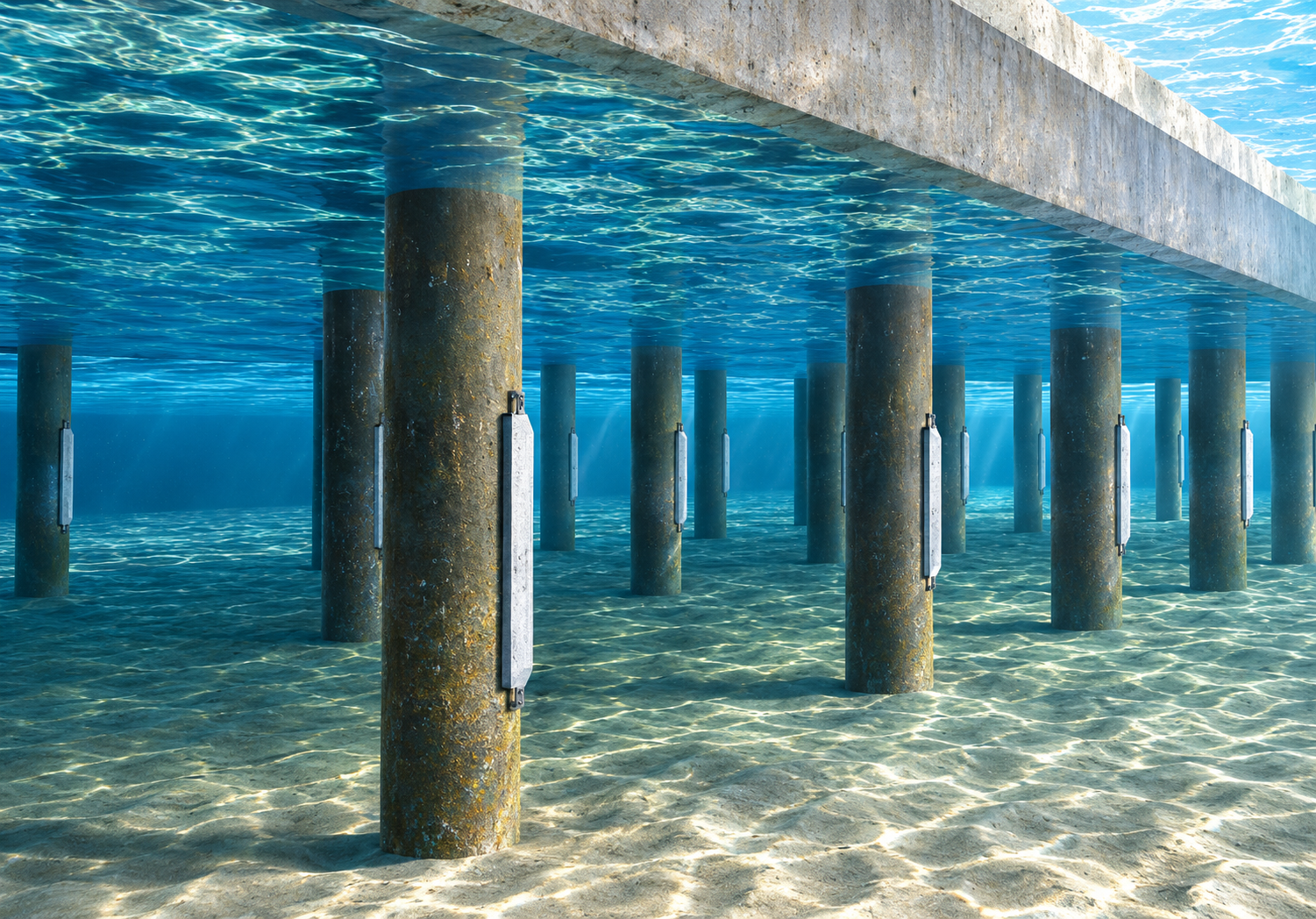
Cathodic protection is generally most effective when steel remains in contact with seawater or another suitable electrolyte. Splash and atmospheric zones require additional corrosion control measures because they are not continuously immersed.
Building a Long-Term Corrosion Control Strategy
Integrating Protection During Initial Design
Cathodic protection is most effective when its requirements are considered early in marine project development. During initial design, engineers can coordinate the selection of structural materials, coatings, electrical connections, and anode installation arrangements.
Early planning also helps identify potential accessibility concerns. Locations suitable for installation during construction may become difficult to reach after the structure enters service.
The design process should establish the intended protection life and identify how the system will be inspected and maintained. These considerations influence both initial construction decisions and future operating requirements.
Incorporating corrosion control into the project design can reduce the need for later modifications. It also provides a clearer framework for coordinating structural durability and maintenance objectives.
Maintaining Protection Throughout Service Life
Marine structures experience changing environmental and operating conditions during their service life. Coatings may deteriorate, anodes may be consumed, and electrical components may require maintenance or replacement.
An effective corrosion management program must account for these changes. Periodic monitoring provides information needed to evaluate whether the system continues to meet its protection objectives.
Maintenance decisions should be based on documented system performance and structural condition. When deficiencies are identified, corrective action can help restore protection before additional corrosion becomes more extensive.
Cathodic protection is therefore not simply a construction-stage treatment. It is a long-term corrosion control system that requires engineering oversight, inspection, and appropriate maintenance.
Conclusion
Cathodic protection plays an important role in improving the durability and long-term performance of steel marine structures. By controlling electrochemical corrosion, properly designed systems can reduce metal loss on submerged and buried steel components, helping preserve foundations, sheet pile walls, offshore installations, and harbour infrastructure. Galvanic anode systems offer a relatively simple method of providing protective current, while impressed current systems provide adjustable output for applications where additional control is beneficial. The most appropriate solution depends on the structure, environmental conditions, design life, and maintenance requirements.
Successful cathodic protection also depends on effective system integration and long-term management. Protective coatings, suitable anode placement, electrical continuity, and consistent CP monitoring all contribute to reliable corrosion control. Because cathodic protection does not address every exposure zone or deterioration mechanism, it must remain part of a broader structural preservation strategy. For marine infrastructure owners and contractors, investing in appropriate corrosion protection during design and maintaining it throughout operation can help support safer, more durable, and more cost-effective waterfront facilities.