
Table of Contents
Choosing between fixed docks and floating marina structures is one of the most important decisions in marina construction. Both systems provide access to vessels, but they respond differently to water levels, waves, currents, and site conditions. Fixed docks provide a stationary platform supported by permanent foundations, while a floating marina moves vertically with changing water levels. Understanding these differences can help owners, developers, engineers, and contractors determine which structural approach better fits a particular waterfront project.
Understanding Fixed and Floating Marina Structures
What Are Fixed Marina Structures?
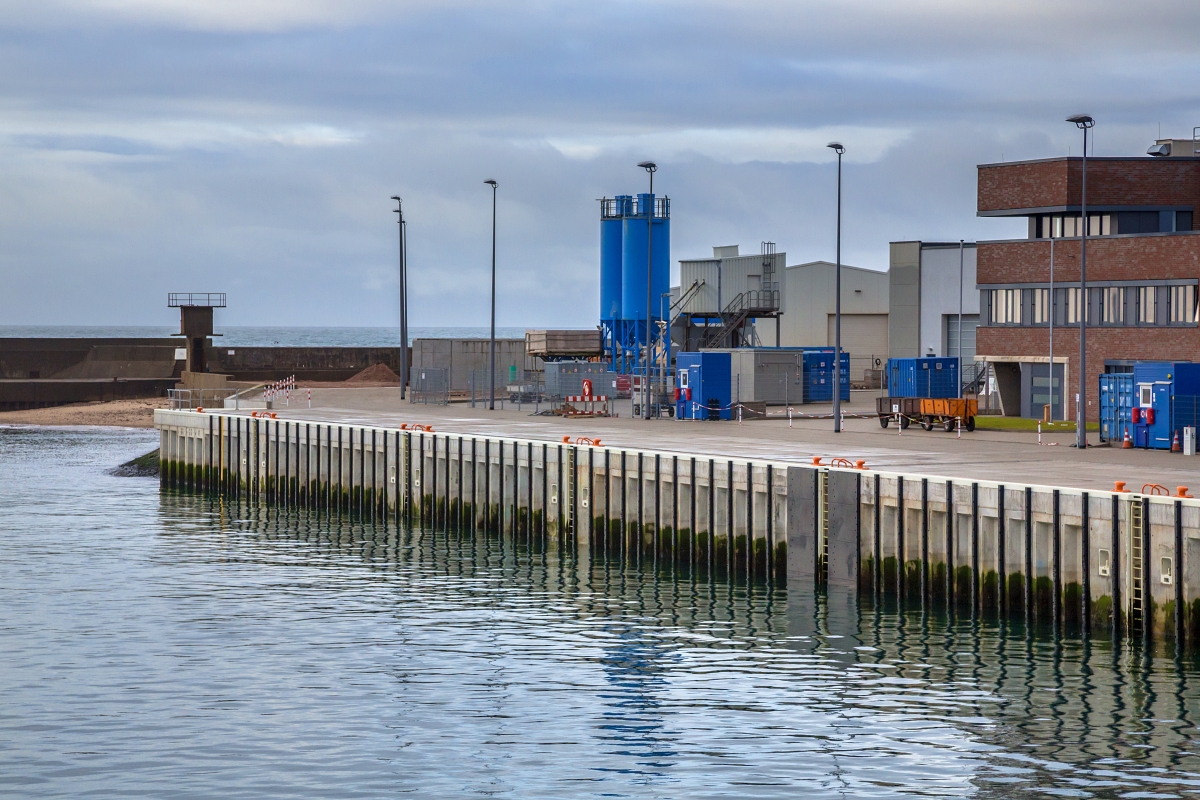
Fixed marina structures are docks or piers supported by permanent foundations, commonly piles driven or drilled into the seabed. The deck remains at a fixed elevation regardless of changes in the surrounding water level. Depending on the project, the structure can incorporate timber, steel, concrete, or a combination of materials.
The foundations transfer loads from the deck and its users into the underlying soil or rock. Engineers must account for vertical loads as well as forces associated with waves, currents, wind, vessels, and other site-specific conditions. The required foundation type and depth therefore depend heavily on geotechnical and environmental conditions.
Because the deck remains at the same elevation, the vertical distance between a fixed dock and a vessel changes as the water level changes. This relationship is particularly important in tidal environments or locations that experience large seasonal fluctuations.
What is a Floating Marina?
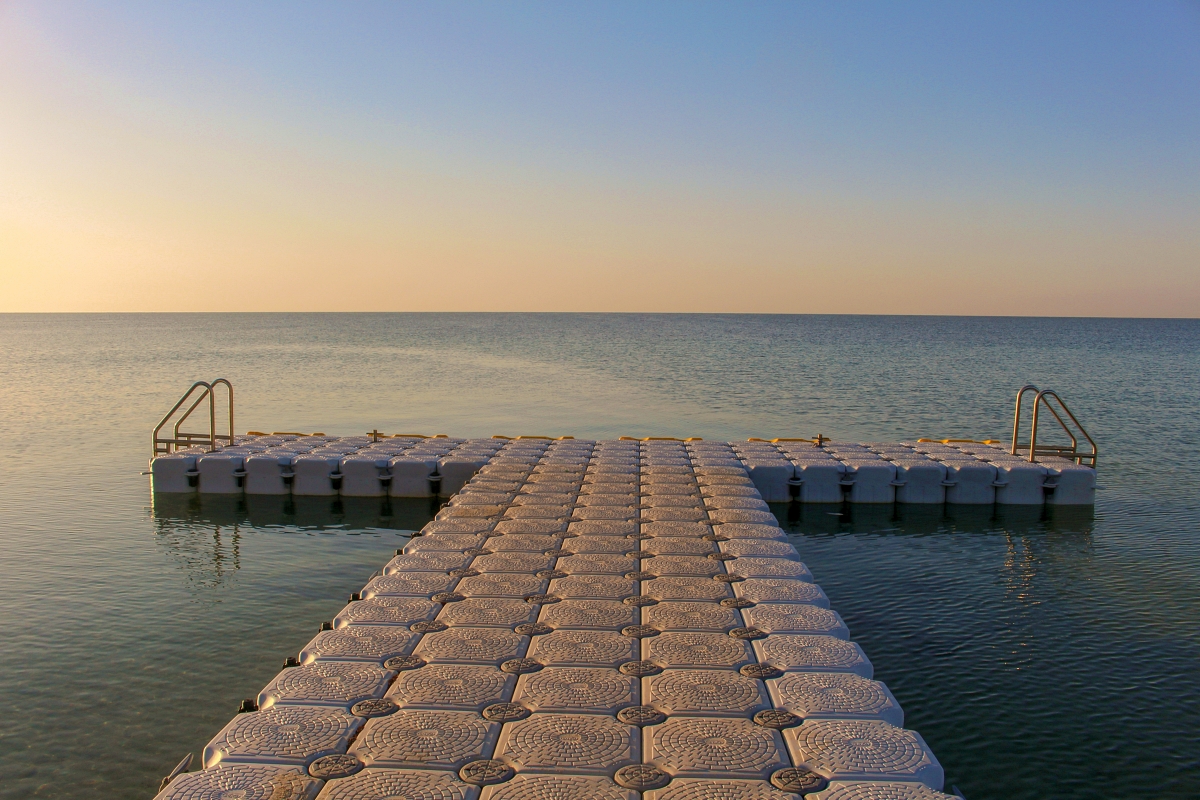
A floating marina uses buoyant pontoons or dock sections that rise and fall with the surrounding water. These sections are usually connected to shore through gangways and held in position by guide piles, anchors, mooring systems, or other engineered restraint systems.
Floating docks can use concrete pontoons, aluminum framing, timber components, steel elements, or manufactured flotation systems. The exact configuration varies considerably between manufacturers and projects, but the basic principle is the same. Buoyancy supports the deck instead of a conventional fixed foundation carrying the entire dock above the water.
One major advantage is that the floating deck maintains a relatively consistent freeboard as water levels change. This can simplify vessel access in tidal waters. However, the structure can move in response to waves and vessel wakes, so stability, connections, anchoring, and environmental loads remain major engineering considerations.
Fixed vs Floating Marina Structures: Key Differences
Fixed and floating structures solve the same basic marina access problem in different ways. Neither approach is automatically better because performance depends on the site’s water levels, waves, seabed conditions, vessel requirements, accessibility needs, construction methods, and long-term maintenance expectations.
|
Design Consideration |
Fixed Marina Structures |
Floating Marina Structures |
|---|---|---|
|
Structural Support |
Permanent foundations such as piles |
Buoyancy with anchors, guide piles, or mooring systems |
|
Water Level Changes |
Deck remains at a fixed elevation |
Deck rises and falls with water |
|
Walking Stability |
Stationary platform |
Can move with waves and wakes |
|
Vessel Boarding |
Height difference varies with water level |
More consistent height relative to water |
|
Foundation Needs |
Requires permanent structural foundations |
Requires an engineered restraint system |
|
Wave Response |
Structure remains fixed while receiving environmental loads |
Structure responds dynamically to waves |
|
Construction |
Often requires pile installation or drilling |
Can incorporate prefabricated floating modules |
|
Maintenance |
Foundations, decking, connections, and structural materials |
Pontoons, flotation, connectors, anchors, and restraint systems |
|
Expansion |
Additional foundations are normally required |
Modular systems can sometimes be expanded or reconfigured |
|
Shore Access |
Fixed connection may be possible |
Typically requires a gangway accommodating vertical movement |
The table illustrates why structural selection cannot be based on a single factor such as initial construction cost. A system that performs well at a protected lake may be inappropriate at an exposed coastal marina, while a solution designed for large tidal fluctuations may be unnecessary at a site with stable water levels.
How Water Levels Influence Marina Design
Fixed Docks and Water Level Changes
Fixed docks can work particularly well where water levels remain within a relatively limited range. A predictable water elevation allows engineers to establish a deck height that provides practical access to the vessels expected to use the facility.
Conditions become more complicated when the water level varies substantially. At low water, a boat may sit significantly below the deck, while high water can reduce or reverse that vertical difference. Designers therefore need to evaluate the expected range of water elevations rather than designing only around an average or typical level.
Water levels can change for several reasons besides ocean tides. Lakes, rivers, and reservoirs can experience seasonal changes caused by rainfall, drought, water management, river discharge, and other environmental factors. Those variations should be understood before the dock elevation is finalized.
Floating Marinas and Tidal Waters
Floating marina systems naturally accommodate changing water elevations because the pontoons rise and fall with the water. This allows the deck to maintain a relatively consistent relationship with a moored vessel, even when the overall water elevation changes substantially.
The movement creates another design challenge at the shoreline. A gangway must connect the stationary shore or fixed structure to the moving floating dock, and its slope changes as the water level rises and falls. Gangway length, landing elevations, structural movement, and accessibility therefore need to be considered together.
The U.S. Access Board includes specific provisions for gangways serving recreational boating facilities. These requirements and exceptions demonstrate why accessibility planning should begin during marina design rather than being treated as an addition after the dock layout has been established.
Low Water and Floating Structures
Floating structures also have operational limits. If the water becomes too shallow, pontoons can potentially contact the bottom rather than remaining fully afloat. Designers therefore need to consider minimum water levels, pontoon draft, seabed elevation, and available clearance.
Anchoring and guide systems must also accommodate the expected vertical movement. A system designed around normal water levels may not perform as intended if actual elevations move outside its planned operating range.
Wave Attenuation and Marina Protection
Why Wave Conditions Matter
Wave conditions affect structural loading, vessel motion, pedestrian comfort, and marina operations. A protected basin experiencing mainly small vessel wakes presents a very different design environment from a marina exposed to ocean swell or significant wind-generated waves.
Wave height is only part of the equation. Wave period, direction, water depth, bathymetry, surrounding structures, and shoreline geometry can influence the way waves enter and move through a marina. These conditions should be evaluated before choosing dock and wave-protection systems.
A marina’s internal layout can also influence wave behavior. Reflections from seawalls, breakwaters, and other structures can change local conditions, which means the performance of individual docks cannot always be evaluated independently from the surrounding harbor.
Wave Response of Fixed Docks
A fixed dock does not rise and fall with individual waves in the same way as a floating pontoon. Its foundations hold the deck at a defined elevation while waves and currents apply forces to the piles and other structural components.
This stationary configuration can provide a stable walking surface during ordinary marina operations. However, stability should not be confused with wave attenuation. A conventional open pile-supported dock allows water and wave energy to pass through the spaces between its supporting piles.
For this reason, a fixed dock should not automatically be treated as a breakwater. If a marina requires protection from substantial waves, a separate fixed breakwater, floating breakwater, or another engineered wave-attenuation system may be required.
Wave Attenuation in Floating Marina Systems
Floating structures interact directly with incoming waves and can experience vertical, horizontal, and rotational movement. Their behavior depends on factors including pontoon dimensions, mass, draft, connection details, anchoring, and the characteristics of the incoming waves.
Some floating structures are specifically engineered as floating breakwaters or wave-attenuating pontoons. These systems are designed to reduce the amount of wave energy transmitted into the protected area, but a normal floating dock should not automatically be assumed to provide effective wave attenuation.
Research into floating breakwaters shows that performance is closely related to both structural geometry and wave characteristics. In particular, longer-period waves can be more difficult for floating systems to attenuate effectively than shorter waves. This makes site-specific wave analysis especially important at marinas exposed to swell.
A product that performs adequately in short, locally generated waves may behave differently when exposed to longer-period waves. Marina construction planning should therefore treat wave attenuation as an engineering problem rather than simply a choice between fixed and floating docks.
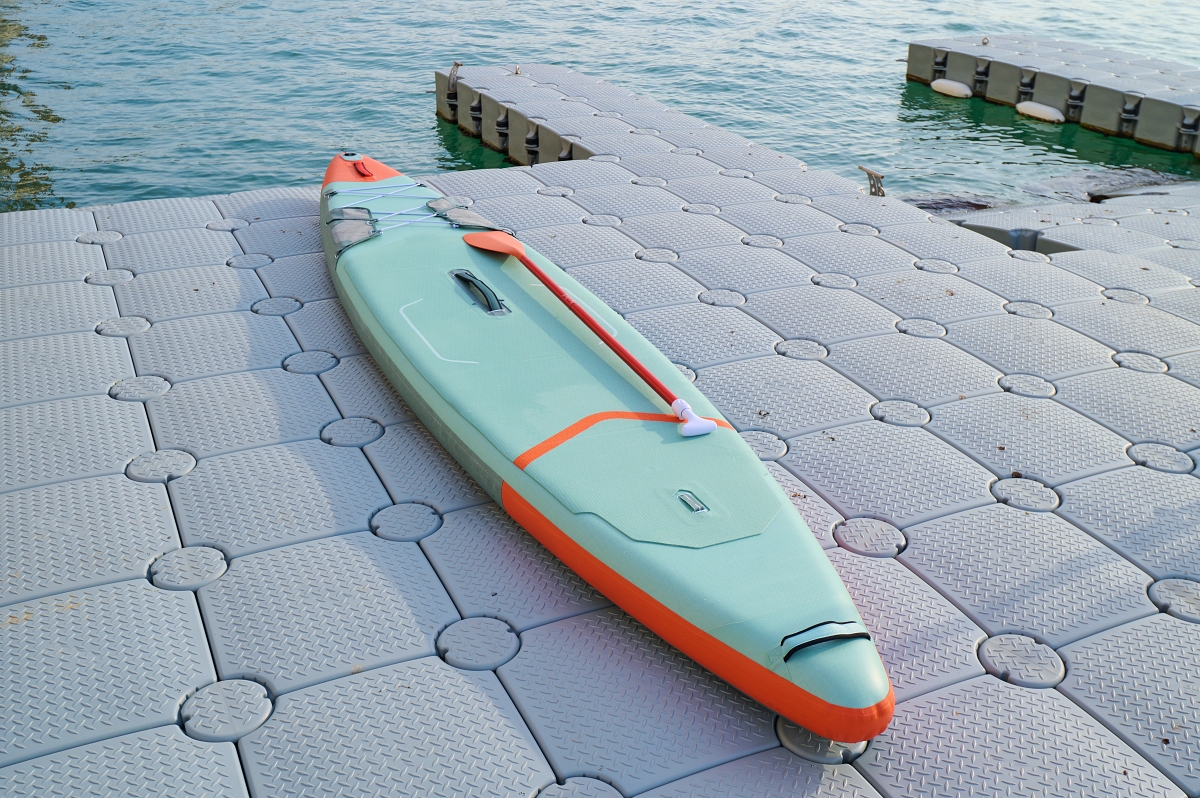
Floating docks rise and fall with changing water levels, helping maintain a relatively consistent relationship between the dock and moored vessels. Fixed docks remain at one elevation, so the vertical distance between the deck and vessel changes with the water level.
Choosing a Wave Protection Strategy
Wave protection should be evaluated separately from the basic choice of berth structure. A marina can use floating docks behind a fixed breakwater, fixed docks inside a naturally protected basin, or floating docks in combination with an engineered floating breakwater.
The appropriate solution depends on water depth, wave climate, seabed conditions, navigation requirements, environmental restrictions, and the desired conditions within the marina. In more complex projects, engineers may use numerical modeling or physical model testing to understand how a proposed layout will respond to waves.
This broader approach is important because marina components interact with one another. A breakwater can change wave direction and reflection patterns, while dock orientation can influence vessel exposure and internal circulation. The complete marina layout should therefore be considered as a system.
Foundation Requirements for Fixed Docks
Fixed docks require permanent structural support, and piles are commonly used to transfer loads into the seabed. Depending on site conditions, these foundations can include steel, concrete, timber, or other engineered pile systems.
Geotechnical information is essential because the characteristics of the soil or rock affect foundation type, installation method, penetration depth, and capacity. Soft sediments, dense soils, rock layers, and underwater obstructions can create very different construction requirements.
Marine contractors may install foundations using pile-driving or drilling equipment operated from barges, temporary platforms, or other marine equipment. Water depth and site access can significantly affect how the work is performed and what equipment can be used.
The foundation design also needs to account for environmental and operational loads. These can include waves, currents, wind, vessel impacts, and loads transferred through the deck and other marina infrastructure.
Anchoring Requirements for a Floating Marina
A floating marina does not eliminate the need for structural restraint. Instead of supporting the entire deck on permanent foundations, the system requires anchors, guide piles, mooring components, or another method of controlling horizontal movement while allowing the necessary vertical movement.
Guide piles are one common approach. The floating structure moves vertically along the piles as water levels change while the piles limit horizontal displacement. Other projects may use anchors, chains, cables, or combinations of restraint systems depending on water depth and site conditions.
These components must withstand loads created by wind, waves, currents, vessels, and dock movement. Connections between floating modules also require careful engineering because repeated movement can create cyclic loads and wear.
As a result, describing floating docks as foundation-free can be misleading. They may not require the same foundation arrangement as fixed docks, but they still depend on engineered systems connected to the seabed or another stable structure.
Comparing Marina Construction Costs
Fixed Dock Construction Costs
The cost of fixed docks is strongly influenced by their foundations. Pile length, pile type, installation method, soil conditions, water depth, and marine equipment requirements can all have a major effect on the construction budget.
A project requiring long piles or difficult drilling can have very different costs from a similar-sized dock built in shallow water with favorable subsurface conditions. Deck materials, utilities, access systems, fendering, and other marina components add to the total cost.
Marine access can also affect construction pricing. If cranes, pile-driving equipment, and crews must work from barges, mobilization and marine operations become part of the project cost.
Floating Marina Construction Costs
Floating marina costs depend on pontoon construction, flotation, connections, anchoring or guide systems, gangways, utilities, and installation. Prefabricated floating modules can reduce some onsite construction work because major components can be manufactured before reaching the marina.
However, floating systems have their own substantial structural requirements. Deep water, challenging anchoring conditions, large environmental loads, or specialized wave-attenuating pontoons can increase project costs.
It is therefore inaccurate to assume that floating docks are always less expensive than fixed docks. A meaningful comparison requires estimates based on the actual site and the complete structural system.
Evaluating Life-Cycle Costs
Initial construction cost represents only part of the financial picture. Marina owners also need to consider inspection, routine maintenance, repairs, replacement components, and long-term structural rehabilitation.
These costs vary according to material selection, exposure conditions, design quality, and maintenance practices. A lower construction price does not necessarily produce the lowest cost over the structure’s full service period.
A project-specific life-cycle analysis provides a better comparison than broad assumptions about fixed and floating systems. It allows owners to consider both immediate construction requirements and expected future expenditures.
Maintenance and Long-Term Durability
Maintaining Fixed Docks
Fixed docks require inspection of decks, foundations, connections, fender systems, and other structural elements. Steel components can experience corrosion, while timber and concrete have their own deterioration mechanisms depending on material properties and environmental exposure.
Underwater foundations also require attention because significant deterioration may not be visible from the deck. Inspection programs should consider the parts of the structure located within the splash zone, tidal zone, and below the waterline.
Maintenance requirements vary substantially between sites. Saltwater exposure, currents, vessel activity, temperature, and material selection all influence how quickly individual components may deteriorate.
Maintaining Floating Marinas
Floating marinas require inspection of pontoons, flotation systems, connections, anchors, guide piles, mooring components, and gangways. Because sections move in response to water and vessel activity, connectors and restraint components can experience repeated loading and wear.
Flotation condition is particularly important because damage can affect freeboard, stability, and dock alignment. Gangways and utility connections also need to accommodate regular movement without developing unsafe conditions.
Modular construction can make it possible to replace individual floating sections in some marina systems. Whether this is practical depends on the original design, availability of compatible components, connections, utilities, and physical access to the affected section.
Environmental Considerations in Marina Construction
Seabed Disturbance
Both fixed and floating structures can affect the seabed. Fixed docks typically require piles or other foundations, while floating systems may require anchors, guide piles, or related restraint components.
The extent of disturbance depends on the number and size of these elements as well as the installation method. Local sediment characteristics and the presence of sensitive aquatic habitats can also influence environmental impacts.
For this reason, neither fixed nor floating marina construction should automatically be described as environmentally preferable. Environmental effects need to be evaluated for the specific location and proposed design.
Shading and Aquatic Habitat
Dock structures can reduce the amount of sunlight reaching aquatic vegetation below them. Research and guidance from NOAA have identified factors including dock dimensions, orientation, height, and construction materials as relevant to shading effects.
Both fixed and floating structures can create shade. The significance of that shading depends on water depth, structure geometry, local habitat, and the presence of light-dependent vegetation such as seagrass.
Environmental considerations can therefore influence the final marina layout. Avoiding sensitive habitat or changing structural geometry may be necessary depending on regulatory requirements and site conditions.
Both fixed and floating marina construction can require regulatory approvals in the United States. Structures in navigable waters may fall under Section 10 of the Rivers and Harbors Act, while activities involving dredged or fill material may also fall under Section 404 of the Clean Water Act.
Permitting Fixed and Floating Marinas
Marina construction in the United States can involve federal, state, and local approvals. Section 10 of the Rivers and Harbors Act applies to certain work and structures in navigable waters of the United States, while Section 404 of the Clean Water Act regulates certain discharges of dredged or fill material into waters of the United States.
The U.S. Army Corps of Engineers identifies structures such as piers, floats, and marinas among activities that can fall within its regulatory program. The exact permits required depend on the proposed activity and location.
Other environmental and local approvals may also apply. Permitting requirements should therefore be investigated early because they can influence marina dimensions, foundation arrangements, dredging, environmental mitigation, and the construction schedule.
Accessibility and User Experience
Access From Fixed Docks
Fixed docks provide a stationary walking surface, which can be beneficial for users and marina operations. Their primary access challenge occurs when changing water levels create a large vertical difference between the vessel and dock.
This difference can vary throughout a tidal cycle or season. Marina designers therefore need to evaluate the types of boats using the facility and the complete range of anticipated water elevations.
Access From Floating Docks
Floating docks maintain a more consistent relationship to the water surface. This can make vessel boarding more predictable as tides rise and fall, although the dock itself can move in response to waves and vessel activity.
The connection between shore and the floating dock also requires particular attention. The U.S. Access Board establishes accessibility requirements for recreational boating facilities, including provisions covering gangways and accessible routes.
Gangway geometry should therefore be considered during early design. Waiting until the layout is complete can make accessibility requirements more difficult to integrate efficiently.
When Fixed Docks Make More Sense
Projects Requiring a Stationary Platform
Fixed docks can be well suited to operations that benefit from a stationary deck. Commercial waterfront activities, equipment handling, and certain service functions can require a firm working platform that does not move with normal wave action.
The structure must still be designed for environmental and operational forces. Stability at deck level does not remove the need to account for wave, current, vessel, and foundation loads.
Sites With Suitable Foundation Conditions
Fixed construction can also be practical where geotechnical conditions support an efficient pile foundation system. Suitable soil or rock conditions may simplify foundation design and construction compared with locations requiring unusually deep or complex foundations.
Water depth and marine equipment access remain important considerations. Favorable soil conditions alone do not determine whether a fixed dock is the best choice.
Areas With Limited Water Level Variation
A fixed deck is easier to use when the difference between typical high and low water levels is relatively small. Designers can establish an elevation that provides suitable access across much of the expected operating range.
This advantage becomes less pronounced as water-level variation increases. Large tidal or seasonal ranges can make the fixed deck less convenient for vessel access.
When a Floating Marina Makes More Sense
Locations With Significant Water Level Changes
A floating marina can be particularly useful where substantial tidal or seasonal changes would create difficult boarding conditions from a fixed dock. The floating structure follows the water surface and maintains a more consistent relationship with moored vessels.
This advantage must be balanced against gangway requirements, wave exposure, anchoring, and minimum water depths. A floating system still requires careful site-specific engineering.
Marinas Requiring Flexible Layouts
Some modular floating dock systems allow sections to be added or reconfigured. This can provide useful flexibility if berth arrangements or vessel requirements change in the future.
Expansion is not unlimited, however. The anchoring system, utilities, available water area, navigation clearances, and permits must support the revised configuration.
Locations With Challenging Fixed Foundations
Floating systems may deserve consideration where deep water or difficult foundation conditions make extensive fixed pile construction challenging. Using buoyancy for structural support changes the type and distribution of foundation requirements.
Anchors or guide piles are still necessary in most systems, so geotechnical conditions remain relevant. The actual advantage can only be determined by comparing engineered alternatives for the specific site.
Can Fixed and Floating Structures Be Combined?
Fixed and floating marina structures can be used together within the same facility. For example, a fixed access pier can lead to floating berths, allowing the project to use a stable shore connection while the vessel berths move with changing water levels.
Different structural systems can also serve different marina functions. Fixed structures may support certain service or operational areas while floating docks provide recreational slips.
Wave protection can be integrated into the same approach. Floating berths can sit behind a fixed breakwater, or a marina may use a specialized floating wave-attenuation system where site conditions support its use.
A hybrid design should still be evaluated as a complete system. Wave behavior, navigation, structural movement, vessel access, utilities, and connections between fixed and floating elements all influence overall performance.
Key Factors to Evaluate Before Construction
Site conditions should drive the structural decision. Water depth, tidal range, seasonal water levels, currents, waves, bathymetry, and seabed conditions all affect whether fixed docks or a floating marina will perform effectively.
Operational requirements are equally important. Vessel sizes, berth configurations, passenger access, service equipment, utilities, fueling systems, and other marina functions can influence deck elevations and structural requirements.
Project owners should also compare complete construction and long-term costs. Foundations, anchors, pontoons, gangways, utilities, environmental work, engineering, permitting, inspection, maintenance, and eventual repairs can all affect the economics of the project.
Environmental and regulatory conditions should be investigated before final design. Sensitive habitats, navigation requirements, water quality regulations, dredging restrictions, and permitting requirements can influence the available structural options.
Choosing the Right Marina Structure
Fixed docks and floating marina systems each have situations where they can be the more practical choice. Fixed structures provide a stationary platform supported by permanent foundations, while floating structures provide a deck that follows changing water levels and maintains a more consistent relationship with vessels.
Neither option should automatically be considered cheaper, stronger, more durable, or better for wave attenuation. Those outcomes depend on the engineering design, materials, environmental exposure, construction quality, maintenance, and site-specific conditions.
In some projects, the best marina construction strategy may combine fixed and floating structures. Separate wave protection may also be required regardless of which dock system is selected.
The decision should begin with reliable information about the site and the marina’s intended use. Comparing the alternatives through geotechnical, structural, coastal, environmental, and cost analysis gives project owners a stronger basis for selecting a system that can perform effectively over the long term.